
 Infant Journal
 Browse articles
SONIC: A novel initiative by Burnley NICU
SONIC stands for Stabilisation and Optimisation of Newborn Infant Course. This unique and innovative course was conceptualised and developed by the neonatal team at Burnley General Hospital neonatal intensive care unit (NICU) and is aimed at neonatal teams of local neonatal units (LNU) and special care units (SCU) in the Northwest Neonatal Operational Delivery Network (NWNODN). This paper describes the context, content, success and scope of this course.
Rajasri Rao SeethamrajuConsultant Neonatologist, Burnley General Hospital
rajasri.seethamraju@elht.nhs.uk
Seethamraju R.R. SONIC: A novel initiative by Burnley NICU. Infant 2024; 20(4): 110-13.
Background
With stratification of the levels of neonatal care offered by neonatal units,1 certain neonatal emergencies have become infrequent in LNUs and SCUs. Preterm births below 27 weeks’ gestation, or less than 800 grams birth weight, should ideally take place in an obstetric setting with NICU attached and, therefore, a pregnant woman should be transferred antenatally. On rare occasions when a woman presents in advanced labour, or has other complications associated with pregnancy, this transfer may be deemed too risky and the baby may need to be delivered in the LNU/SCU setting. There may also be occasions where a woman at term gestation faces complications during labour and the baby is born significantly compromised. It can be a daunting task for LNU/SCU neonatal teams to deal with these unexpected neonatal emergencies.
In the era of perinatal optimisation2 as recommended by the British Association of Perinatal Medicine and nationally audited neonatal standards,3 no allowances are made for the relative inexperience of LNU/SCU staff in dealing with extreme prematurity. All neonatal units will have their compliance with optimisation measures published. LNU/SCUs may struggle with compliance measures such as optimal cord management and thermoregulation in extreme preterm babies who will, in fact, need them the most.
The restructuring of paediatric training following the UK Shape of Training report4 has removed the six-month mandatory time spent in neonatology as a junior registrar. This can result in registrars at a district general hospital (DGH) having little recent experience of leading a team in a neonatal emergency.
Currently, there are no standard training courses that help maintain clinical skills for permanent medical staff on neonatal units, apart from the Newborn Life Support course (NLS). This could consequently lead to attrition of skills, or inexperience in the team in a DGH. Courses such as ARNI (Advanced Resuscitation of the Newborn Infant) and Neosim (Neonatal Simulation) train medical and nursing staff. However, although they are being trained in a team that works together at that session, they may not necessarily work with each other back on their own wards. Currently there are few neonatal courses to train neonatal doctors and nurses who work together, to foster teamworking and communication.
Increased scrutiny of maternity and neonatal care in the last two decades has made it obligatory on NICUs to share areas of good practice with neighbouring LNU/SCUs in the network. This is also in keeping with the education strategy of the NWNODN.5 The neonatal team at Burnley identified the training gap and envisioned a course that would address all of the above factors. The course would be vital in providing opportunities for hands-on experience of neonatal emergencies that might occur on an LNU/SCU, which would then ensure optimal stabilisation of the neonate prior to transfer to a NICU if deemed necessary. This led to the design and implementation of SONIC.
Design
SONIC provides simulation-based learning around three key areas of acute neonatal care, which LNU/SCU teams can occasionally encounter and find challenging. These include stabilisation of the extremely premature infant, management of the term infant with poor or no cardiac output and the difficult airway scenario.
Learning objectives of SONIC
- Empowering neighbouring LNU/SCUs to undertake peripartum optimisation measures such as optimal cord management and thermoregulation consistently.
- Sharing good practice in dealing with challenging scenarios like extreme preterm or challenging term babies at LNU/SCUs.
- Enabling neonatal staff at LNU/SCUs to maintain skills and appropriate team behaviours with hands-on practice.
Faculty
The faculty consists of two consultants and two advanced neonatal nurse practitioners (ANNP) from the NICU at Burnley. These staff members have extensive clinical and simulation credentials. They are well supported by two neonatal nurse educators who support with debriefs and equipment. Two members of the Trust simulation team set up the high-fidelity environment.
Teams
A key principle that underpins SONIC is training in teams. Effective teamwork between the medical and nursing professions will improve outcomes.6-7 The LNU/SCUs register as teams of four, with two medical and two nursing members of staff. These are two senior members of the neonatal nursing team and two senior members of the medical team (consultant/ANNP/SAS doctors/specialty trainee ST6 and above). The teams work with each other in simulated high stress situations, as they would in a real-life scenario. The learning of not just knowledge and skills, but also attitudes and team behaviours will therefore be developed. This enables staff members to practice in their own teams and cascade the learning onto their unit. It also enables them to ask questions relevant to their own settings and learn to deal with challenges as a team. Numbers are restricted to four teams per course, allowing every team to have hands-on practice and adequate time and attention of the faculty.
Pre-course manual
A comprehensive pre-course manual is sent to participants a few weeks before the course. It aims to share the approach adopted by the Burnley neonatal unit based on the best available evidence. All resuscitation algorithms in the SONIC manual and scenarios follow the NLS.
Content
SONIC is a full day, face-to-face, immersive simulation course. It takes place in the simulation suite of Burnley General Hospital. The day starts with introductions, which lead to an interactive session where the expectations of participants are listed and addressed throughout the day.
A brief lecture follows, where perinatal optimisation principles are discussed, including challenges that LNU/SCUs face in implementing them.
Faculty members then deliver a mock simulation scenario. They demonstrate how scenarios will run for the rest of the day. They showcase a delivery room cuddle with mum after stabilising her extreme preterm newborn, including discussing early expression of colostrum, which is an important optimisation measure for preterm babies. They also demonstrate the evidence-based principles of leadership and followership8 for effective teamworking.
For the rest of the day, teams will rotate between four immersive simulation scenarios.
- Optimal cord management (OCM) – starting with a brief discussion on the physiological principles behind deferred cord clamping. The scenario focuses on two main elements. The initial focus is on role allocation, preparation for the stabilisation of an extreme preterm infant and communication with the parent/s before delivery. In the second part, participants practise setting up and performing OCM both in the delivery room and the theatre setting.
- Stabilisation of the extreme preterm baby in the LNU/SCU setting – emphasis is on thermoregulation, delivery room CPAP (continuous positive airway pressure), airway management with intubation, as well as other non-invasive respiratory strategies.
- Term baby born with no cardiac output – algorithm and procedural skills for airway management and vascular access are practised with precise teamwork, situational awareness and closed loop communication.
- Difficult airway – empowers LNU/SCUs to use various airway equipment and strategies in an algorithm-based approach and knowing when to ask
for help.
There is a feedback session at the end of the day to ensure expectations of the teams have been met.
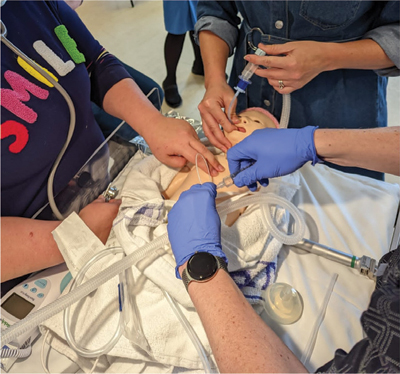
FIGURE 1 Term baby born with no cardiac output.
The journey
The study day was first proposed in May 2022. Planning and execution took six months, and the first SONIC was held in November 2022. There were two further courses in 2023 and one in March 2024. Teams from all three regions in the network (Lancashire and South Cumbria, Cheshire and Merseyside and Greater Manchester) have participated (FIGURE 2).
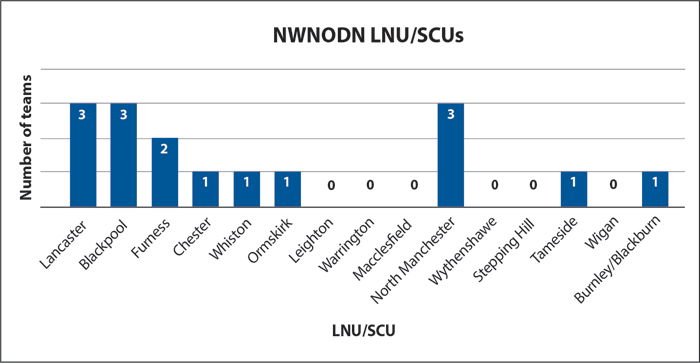
FIGURE 2 The SONIC teams from all three regions of the NWNODN to date.
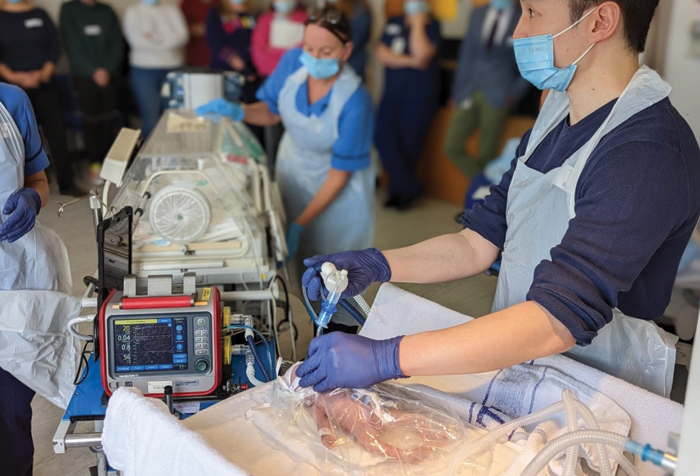
FIGURE 3 Stabilisation of the extreme preterm baby.
We have used the course to bridge some training needs of our own staff. We had a team from Burnley NICU attend the course in March 2024, which comprised two newly qualified neonatal nurses and two permanent neonatal medical staff (one has returned after maternity and the other has stepped up into a registrar role). The course has provided them an opportunity to manage neonatal emergencies in a safe and supervised manner.
The East Lancashire Hospitals NHS Trust is distributed over two sites with the A&E department, adult ICU and paediatrics on a different site. On rare occasions, there may be unexpected preterm or complicated deliveries in these departments, which will be managed by the paediatric team pending arrival of the neonatal team. In July 2024, we will have a team from the paediatrics department attend our course. We will be modifying the setting of each scenario to match their own environment and train them in managing the neonatal emergency.
The SONIC team advertises on the Network bulletin and runs three courses per year. There are two further courses in 2024 (July and November).
Feedback
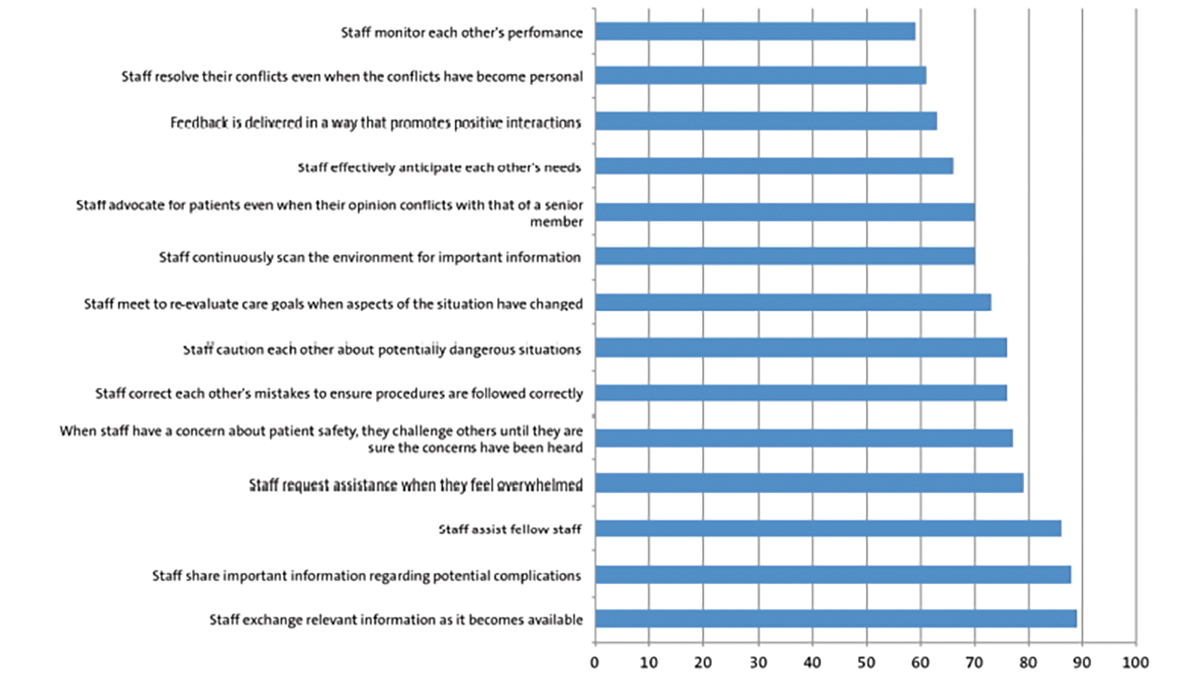
SONIC has received very positive feedback (TABLE 1) and critique (TABLE 2), based on which we have made improvements to enrich the course further.
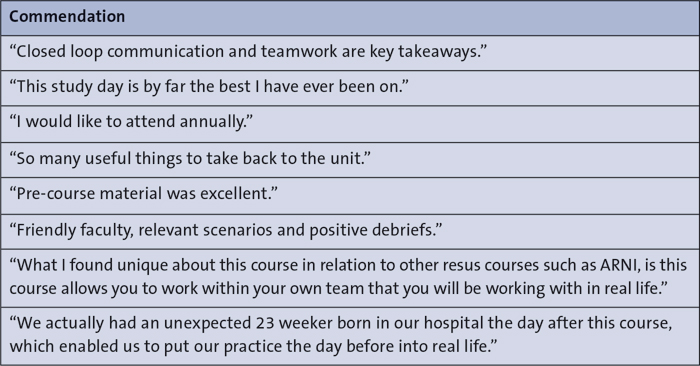
TABLE 1 Positive feedback.
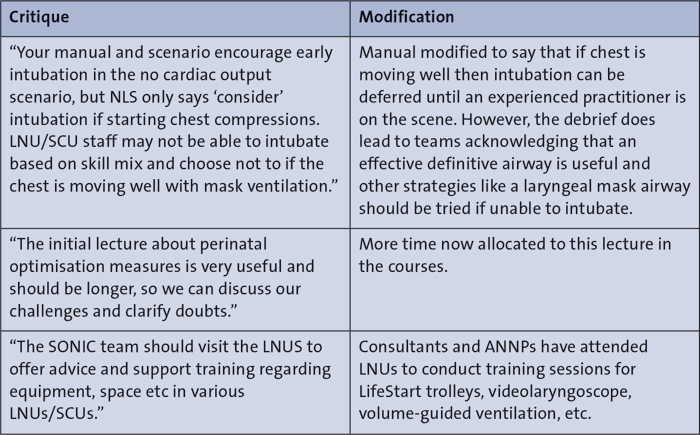
TABLE 2 Critique with imposed changes.
Challenges
There is lot of time spent in planning, administration, set-up and delivery of the course and with increasing demand for more courses, this is proving difficult for all the faculty. There is a considerable cost to running a course in a high fidelity setting with high technology manikins, while avoiding sponsorship. This has meant that the registration fee per delegate, though still nominal, has increased. There is also an increased risk of running it as a team event, as last-minute cancellations can impair the process.
Future
The SONIC team has been requested to provide more procedural skill practise with chest drain and umbilical line insertions, more scenarios to include neonatal seizures, hypoxic ischaemic encephalopathy and surgical emergencies. It is hoped that SONIC will be recognised as a mandatory course for members of neonatal emergency response teams in LNU/SCUs. In the long term, it is hoped that more networks will embrace SONIC to train their own LNU/SCU staff. A Train the Trainers workshop for SONIC could be developed to train NICU staff to provide SONIC in each network.
Conclusion
In our view, SONIC is a novel and very successful initiative to train neonatal teams within the network to improve perinatal outcomes. In the current climate of increased scrutiny of maternity and neonatal departments, we believe that this course has the potential to improve knowledge, give the opportunity to practise skills and to develop team behaviours to enable the best outcomes for each patient. Further research is needed to evaluate the recall, retention and reproducibility of learning at the workplace and whether it leads to improved outcomes for the newborn infant and their family.
Acknowledgements
The SONIC faculty includes: Rajasri Seethamraju, Consultant Neonatologist, Departmental Sim Lead and Course Director of SONIC; Andrew Cox, Consultant Neonatologist and Difficult Airway Lead; Samantha Bend, ANNP and NLS instructor; Ruksana Patel, ANNP and NLS Course Director; Catherine Douglas, Band 7 Nurse and Clinical Educator; Diane Benson, Band 6 Nurse and Practice Educator.
We would like to acknowledge Karen Parks and Sharon Peel from the simulation team at East Lancashire Hospitals NHS Trust for their commitment to SONIC; Dr Amitava Sur for his input into the design of the course; and Dr. Chi Tse for his input into the design of the manual. They have also been faculty on some of the courses. Finally, our sincere gratitude to Dr Savithri Sivashankar, clinical director of Burnley NICU for her unreserved support to SONIC.
 Free download PDF
Or read this article in our
Tablet/iPad edition
- SONIC is empowering LNU/SCU staff to deal with unexpected emergencies
- It has scope to cater to training needs of neonatal emergency response teams in LNU/SCUs within the network.
- There has been very positive feedback in the last 18 months.
- Further research is needed to identify whether retention and recall of training could improve outcomes for patients.
Also published in Infant: