
 Infant Journal
 Browse articles
Neuroprotection: an equipment guide
Reduction of oxygen to the brain at birth can cause hypoxic-ischaemic encephalopathy, resulting in brain injury in neonates. There is a need, therefore, for neuroprotective strategies and therapies to be developed to minimise brain cell injury and support the developing brain. Neuroprotective interventions such as active cooling are intended to help the brain reduce neuronal cell death. Brain activity will be monitored with continuous electroencephalography to identify any seizure activity.
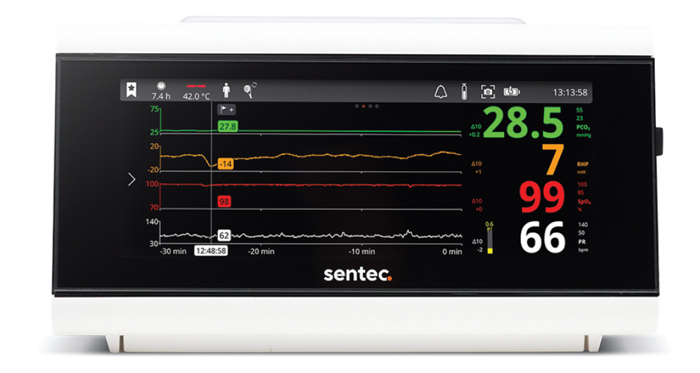
Continuous CO2 information is provided.
The Sentec tCOM+ is built with the NICU in mind, delivering the accuracy clinicians rely on to guide care, along with features tailored to the unit’s unique clinical and operational needs, such as Smart Cal-Mem. A patient may be disconnected for up to 30 minutes without recalibration of the sensors, supporting kangaroo care and repositioning.
The monitor has versatile attachment options, which include a non-adhesive wrap designed for very low birth weight infants in high humidity environments. Real-time event logging is available to track the impact of interventions and continuous CO2 information helps safely reduce blood draws and heel sticks, while the non-adhesive wrap may stay in place for up to eight hours to enable low stimulation protocols.
Benefits for clinicians include continuous, accurate CO2 monitoring, which, paired with the non-adhesive wrap, allows for minimal handling of infants. Clinicians are not required to disturb infants in order to re-site the wraps, which also allows infants to remain calm and without unnecessary distress.
Transcutaneous CO2 monitoring enables accurate ventilation information where end tidal cannot. Monitoring can continue even during high frequency and high flow ventilation methods, as well as continuous positive airway pressure ventilation and spontaneous breathing.
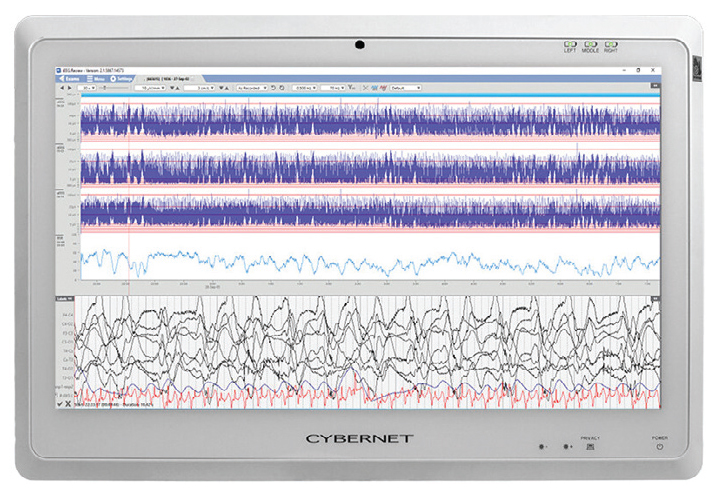
Data from monitors can be recorded and time synchronised with the EEG and video.
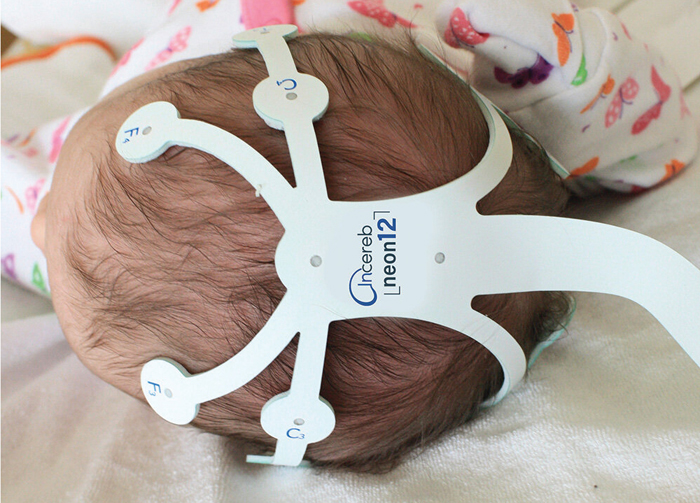
This system offers a quick solution for placement of eight or 12 electrodes.
Continuous electroencephalography (EEG) monitoring is provided by the StratusEEG cloud, available from NERVUS. Designed for aEEG/CFM use, the Stratus EEG monitor can be attached and working in a few minutes.
Up to eight trends can be added, including aEEG, bursts per minute, inter-burst interval and burst-suppression ratio. Neonatologists and neurologists can quickly log in and review trends, scroll EEG and video using Stratus Web-Centrum, a multi-platform web-based Review software from wherever they happen to be working, even from home.
Multiple ICU systems can be monitored across several wards using the innovative Team Monitor and individual acquisition recordings can be controlled with Remote Record. The full EEG is being recorded in the background. Data from ICU monitors can be recorded time synchronised with the EEG and video.
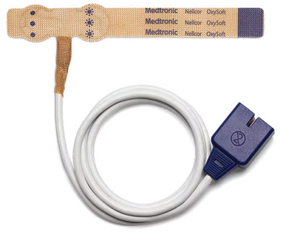
The Nellcor OxySoft sensor is engineered with brighter LEDs on a flexible circuit.
The Nellcor OxySoft sensor by Medtronic is said to be the first oxygen saturation sensor (SpO2 sensor) with a gentle silicone adhesive that withstands up to 18 repositions without losing its adhesiveness. It has 50% improved signal acquisition and a 50% reduced post time in simulated low perfusion and thicker tissue. The Nellcor OxySoft sensor is designed to provide faster readings in challenging situations, stay adhered longer and can be repositioned without pulling on or damaging fragile skin. It has a new silicone adhesive, brighter LEDs, thoughtful cord placement and a lower, lighter profile.
Nellcor pulse oximetry provides advanced digital signal processing technology for reliable operation even during low perfusion and signal interference, including patient motion. LoSat expanded the accuracy range of 60% to 100% SpO2 when used with Nellcor pulse oximetry adhesive sensors with OxiMax technology.
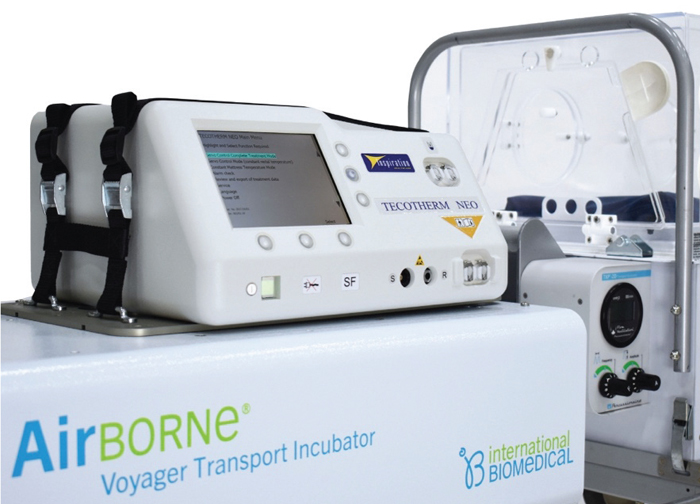
Ideal for transport, the small and lightweight Tecotherm Neo can be integrated into the AirBorne Transport Incubator System.
The TecoTHERM Neo by Tec Com Medizintechnik GmbH is an infant cooling system. It is an advanced medical device designed to treat hypoxic-ischemic encephalopathy in infants, by providing precise temperature control for therapeutic hypothermia treatment. The system not only cools but warms too, and can be used to provide supplemental heat to patients that need extra thermoregulation support. It has three operating modes: complete treatment, servo and manual. Complete treatment mode executes the 72 hour cool down and re-warm protocol based on the TOBY Study. The system is designed to be set by the clinician initially, then left to work its way through the programmed treatment without further input. Data can then be exported through a USB stick.
 Free download PDF