
 Infant Journal
 Browse articles
Is the current 36-hour blood culture reporting system leading to timely discharge?
This study reviews the practical application of the National Institute for Health and Care Excellence (NICE) guidance on discontinuing antibiotics at 36 hours in newborn infants at high risk of infection or having subtle signs. The aim is to optimise patient flow and minimise exposure in a regional neonatal set-up.
Anupam Gupta
Consultant Neonatologist1 and Honorary Senior Lecturer2
Maria Hadjicosta
Consultant Paediatrician3
Arindam Mukherjee
Consultant Neonatologist,1 Research Lead1 and Honorary Senior Lecturer,2
arin.mukherjee@mft.nhs.uk
1Department of Neonatology, St Mary’s Hospital, Manchester University NHS Foundation Trust; 2 University of Manchester; 3Department of Paediatrics, Furness General Hospital, University Hospitals of Morecambe Bay NHS Foundation Trust
Gupta A., Hadjicosta M., Mukherjee A. Is the current 36-hour blood culture reporting system leading to timely discharge? Infant 2024;20(4):114-15.
Background
Newborn infants receive prophylactic antibiotics if they are at high risk for contracting infection. Neonatal antibiotic use is associated with a greater risk of nosocomial infection, necrotising enterocolitis and mortality. It can induce drug-resistant pathogens that contribute to increased neonatal morbidity/mortality, healthcare costs and a prolonged length of stay.1 In 2012, NICE recommended discontinuing antibiotics after 36 hours in asymptomatic infants with a negative blood culture result.2 The current system of reporting negative neonatal blood cultures within 36 hours of collection is considered to optimise resources and enhance patient experience by facilitating timely discharge – it has become an established practice in the UK over recent years. Anecdotal evidence, however, suggests that its effectiveness may be questionable. Therefore, we conducted a prospective study to systematically review and identify any potential lessons.
Methods
This study was conducted at a regional maternity and newborn centre where over 10,000 deliveries occur annually. It included asymptomatic full-term infants that received prophylactic IV antibiotics in the postnatal ward due to risk factors for developing sepsis, and whose blood culture results were negative. Antibiotics were stopped after 36 hours following NICE guidelines. The study collected data on various time points, including the time from birth to sample collection, blood culture incubator load time, time from incubation to reporting, time when blood culture results were checked and time from sample collection to discharge home.3 In cases where discharge was delayed despite a negative blood culture report, a further subgroup analysis sought to explore alternative explanations to determine reasons for the delay. The data were collected using a dedicated study proforma and analysed using the statistical package, SPSS (20.0).
Results
Between June and August 2020, 134 infants were included. The timeline for blood sample collection to discharge home is illustrated in TABLE 1 and FIGURE 1. The data highlight the following points:
- The blood sample collection encountered a delay (mean = 8.5 hours) despite the recommendation by NICE that blood culture tests should be performed within an hour of deciding to perform an infection screen.
- There was a delay in discharge home (mean = 76.9 hours of age). This occurred despite a relatively acceptable incubation duration to blood culture check (mean = 39.2 hours). This led to further subgroup analysis of the data to determine whether other factors, such as jaundice or feeding difficulties, caused the delay.
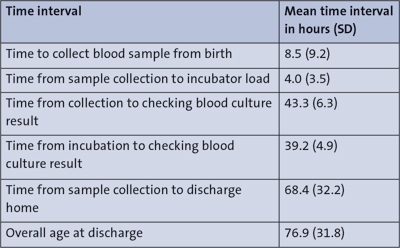
TABLE 1 Timeline for blood sample collection to discharge home. Mean time interval in hours with standard deviation (SD) in brackets.
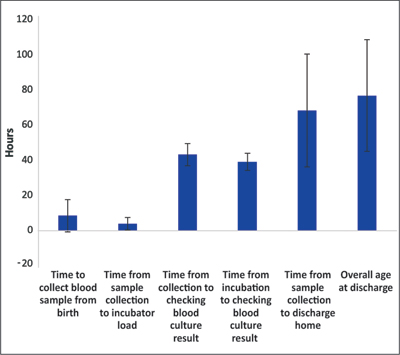
FIGURE 1 Timeline for blood sample collection to discharge home.
A further subgroup analysis was conducted in which participating infants were divided into two groups:
- Group A = 109 infants who had no documented reason for delayed discharge
- Group B = 25 infants who had valid explanations for the delay in discharge such as neonatal jaundice, feeding concerns, maternal issues, staffing problems or family/social issues.
The results of this exercise are presented in TABLE 2 and FIGURE 2. The study also investigated whether any factors affecting discharges in Group A were not recorded in the notes. The analysis revealed that the mean duration difference of 37.6 hours between the two groups was statistically significant, making it highly unlikely that similar factors affecting discharges in Group A were not recorded in the notes.
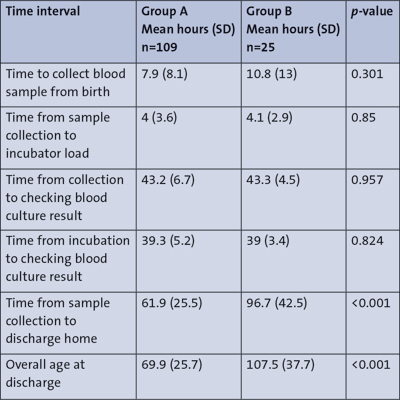
TABLE 2 Subgroup analysis. Group A = group without obvious explanation or documented reason for the delay, Group B = group with an explanation or reason for the delay.
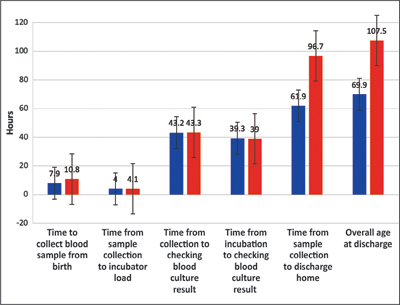
FIGURE 2 Subgroup analysis. Comparison between Group A (blue) and Group B (red).
Discussion and conclusions
In 2012, the NICE Clinical Guideline 149 recommended reporting blood cultures within 36 hours to reduce unnecessary hospital stays, facilitate early discharges and optimise health resources.
Our data demonstrate that despite the guidance, a significant proportion of infants (81%; 109/134) continue to remain hospitalised for unspecified reasons. The current system for managing babies with suspected infections causes delayed discharges with cost and patient throughput implications. This requires further investigation into modifiable factors and presents an opportunity to adopt a proactive approach to discharge planning that prioritises planning for every patient. To achieve this, effective collaboration between medical and midwifery teams is crucial. Such collaborative efforts can enable the development of individualised discharge planning strategies that ensure better patient outcomes.4 Therefore, it is highly recommended that a ‘discharge without delay’ approach is adopted to ensure prompt patient discharge and to minimise hospitalisation time.
Author contributions
Project conceived by AM and AG. Template for data collection by AM and AG. Data collection by MH. Analysis by AM, AG and MH. First draft prepared by AG. Revisions by AM, MH and AG. Final draft approved by AM, AG and MH.
 Free download PDF
Or read this article in our
Tablet/iPad edition